
Safe Kids Golf Tournament

Safe Kids Oklahoma celebrated our 12th annual Tee-Up for Safe Kids golf tournament Monday, August 24th at Quail Creek Golf Course.

Safe Kids would like to thank the many volunteers and golfers who made this day a success!

We’re on Twitter!

Follow us on Twitter to get up to the minute updates about Safe Kids Oklahoma and issues concerning children's safety.

During National Burn Awareness Week (February 7-13), Safe Kids Oklahoma reminds parents and caregivers that fire is just one cause of burn injuries — children can also be seriously injured by hot foods and beverages, heating appliances, hot pots and pans, electrical currents and chemicals.

Among all accidental injuries, fire and burns are the number five cause of death in children ages 14 and under — in part because young children cannot recognize heat-related hazards quickly enough to react appropriately.

Children’s skin burns at lower temperatures and more deeply than that of older children and adults. A child exposed to 140-degree Fahrenheit liquid for five seconds will sustain a third-degree burn.

 Each year, approximately 113,600 children ages 14 and under are treated for fire/burn injuries and 518 children die due to unintentional fire- and burn-related injury. Scald burns, caused by hot liquids or steam, are more common types of burn-related injuries among young children, compared to contact burns, caused by direct contact with fire, which is more prevalent among older children. Hot tap water can cause very severe burns and accounts for many deaths and hospitalizations.  “Kids are also at risk around hot foods and beverages, space heaters, steam irons and curling irons,” says Christy S. Cornforth, Safe Kids Oklahoma coordinator. “There’s a lot you can do around the home to minimize the risk of burn injuries in everyday life.”

Safe Kids Oklahoma urges caregivers to:

Ÿ    Reduce water temperature. Set your hot water heater to 120 degrees Fahrenheit or below. Consider putting anti-scald devices (about $40) on each water faucet and shower head. Check the bathwater with your wrist or elbow before placing your child in it.

Ÿ    Prevent spills. If possible, cook with pots and pans on back burners and turn handles away from the front. Avoid wearing long sleeves or baggy clothes in the kitchen. Don’t place containers of hot food or liquid near the edge of a counter or table and remove tablecloths.

  • Establish a “kid-free zone.” Make the stove area a “kid-free zone” (3 feet is a good distance). Mark it on the floor with bright tape. Never leave your child alone in the kitchen. Don’t hold children while cooking or while carrying hot foods and beverages.
  • Test food and drink temperature. Taste cooked foods and heated liquids to make sure they’re not too hot for children. Never microwave a baby’s bottle. Drinks heated in a microwave may be much hotter than their containers. Instead, heat bottles with warm water and test them before feeding your child.

Ÿ    Keep electrical cords out of reach — especially extension cords and cords connected to heating appliances such as coffee pots and deep fryers. Make sure electrical cords can’t be pulled or snagged into a bathtub or sink. Don’t leave a hot iron sitting on an ironing board unattended.

Ÿ  Childproof your home. Cover open electrical outlets so children can’t insert metal objects into outlets, which can cause electrical burns. Lock matches, lighters and flammable materials out of a child’s reach. Keep children away from candles and other open flames.

Ÿ    Actively supervise. Simply being in the same room with a child is not necessarily supervising. Safety precautions are important, but there is no substitute for active supervision.

Ÿ    Don’t let children play with or ignite fireworks. Fireworks injured more than 2,304 children in 2006. Fireworks are intended for use by adults in open spaces with plenty of active supervision for every child present.

The theme of this year’s Burn Awareness Week is preventing gasoline burns.  “If you buy gasoline cans, get the ones with child resistant gas caps.  Remember to keep all flammable liquids out of sight and reach of children and don’t let children play with matches or gasoline, says Cornforth.

It is still important to take precautions against fire, too. “You need a smoke alarm on each level of your home and in every sleeping area. Make sure each alarm actually works,” says Cornforth. Test your smoke alarms once a month and replace the batteries once a year (except for lithium batteries that last for 10 years according to manufacturer’s instructions). A working smoke alarm reduces the risk of dying in a fire by nearly half.

Comments (0)
Feb
02

Child Passenger Safety Law

By ccornforth · Comments (0)

Motor vehicle crashes are the leading cause of unintentional injury-related death among children ages 14 and under.  In 2008 Oklahoma lost 56 children in motor vehicle crashes; 25 of these fatalities were due to the child not being properly restrained.

 The 2001 report A National Rating of Child Occupant Protection Laws, Safe Kids stringently measured child occupant protection laws in all 50 states and the District of Columbia against a model law that requires correct restraint of all children, in all seating positions, in the care of all drivers.  In the report, Oklahoma received an “F.”

 The previous law only protected children under age 4 and under 60 lbs., but now all children under 6 will have to be transported in a child safety seat or booster seat.

 “Since the vast majority of children reach age 4 long before they reach 60 lbs., most children were being placed in seat belts alone when they turned 4,” said Christy S. Cornforth. Exact figures on the percentage of 4- and 5-year-olds not being transported in booster seats are not available, but it has been estimated that less than 20 percent of these children were riding in the appropriate restraint, she said.

 “We are very pleased that the Oklahoma Legislature saw fit to bring our law more in line with the ideal standard,” said Cornforth. “Although the law still falls short of that recommendation of 8 years old, this is definitely a step in the right direction.”

 “We believe parents and caregivers look to the law for guidance in the safest way to restrain children in motor vehicles. If it’s legal, they assume it’s safe,” she said. “Recently, we have worked very hard to help parents understand that ‘legal’ and ‘safe’ are not always synonymous.”

Comments (0)
Jan
22

Furniture Hazards

By ccornforth · Comments (0)

The U.S. Consumer Product Safety Commission estimates that between 2000 and 2006 there were at least 180 deaths related to tip-over’s of furniture, televisions or appliances. Most of these deaths, 80 percent of them, involved children younger than 10. In 2007, the CPSC identified this issue as one of the top five hidden home hazards. “Kids can be seriously injured or killed as a result of climbing onto, falling against or pulling themselves up on shelves, bookcases, dressers, TV tables and other furniture,” says Christy S. Cornforth, Safe Kids Oklahoma coordinator.

 CPSC data also shows that in 2006 there were 19,300 injuries associated with product instability or tip-over’s involving children younger than 10. That number is almost half of all estimated instability and tip-over injuries during 2006. “If a piece of furniture is unstable or top-heavy, fasten it to a wall using brackets, screws or wall straps,” says Cornforth. “Keep heavier items on lower shelves or in lower drawers. Don’t keep remote controls, candy or other tempting items on unstable stands or tables. A child might be enticed to reach for the top and pull down the object, the stand or both,” says Cornforth.

 “Tie up loose cords, too — a child pulling on an electrical cord, or tripping on one, could pull an appliance off a stand,” says Cornforth. Other steps everyone can take to protect children at home include teaching children not to climb or jump on furniture and pushing the TV as far back as possible from the front of its stand.

 Kids are also in danger of suffocation if they become accidentally trapped in a cabinet, toy chest or laundry machine; in 2007 alone there were 3, 270 injuries to children ages 2-14 involving toy chests.  Always supervise children around any confined space and keep the doors closed and locked.

 Toy chests that meet voluntary standards set by the CPSC are equipped with lid supports that hold the lid open in any position. The standards also call for ventilation holes to prevent suffocation. “If you have a toy chest with a lid that doesn’t stay open, the CPSC recommends you remove the lid or install a spring-loaded lid support,” says Cornforth.

 “These are not hazards that kill thousands of children every year, like vehicle crashes or drowning, but they are so easy to prevent and the consequences can be so severe,” says Cornforth. “Don’t underestimate the possibility of a small child being crushed by unsteady furniture.”

For preventing furniture tip-overs, please visit www.onestepahead.com and search “Anti-Tip Furniture Straps”, “No-Tip Furniture Brackets” and “Flat Screen Anti-Tip Straps”

Categories : Home Safety
Comments (0)
Jan
19

Carbon Monoxide Poisoning

By ccornforth · Comments (0)

Carbon Monoxide poisoning is one of the most common causes of poisoning death.

 Poorly functioning heating systems and operation of a motor vehicle in an enclosed space (e.g., a garage) with inadequate ventilation are the leading causes of CO poisoning in the United States.Gasoline-powered generators used during power outages are another common source of CO poisoning. Fuel burning systems, including furnaces, boilers, firepalces, wood stoves, water heaters, chimneys, flues and vents should be checked annually by a professional.

 People who are asleep or intoxicated can die from CO poisoning without experiencing any symptoms. Low levels of CO poisoning can be confused with other symptoms of illness and can go undetected. Symptoms of CO poisoning include headache, dizziness, weakness, nausea, vomiting, chest pain and confusion. Extended exposure can lead to loss of consciousness and death. CO poisoning can result in long-term health problems if not treated promptly. Children are thought to be more susceptible to CO poisoning than adults.

 The Oklahoma Poison Control Center offers the following safety tips:

• Have your heating system, water heater and any other gas-, oil- or coal-burning appliances serviced by a qualified technician every year.

• Install battery-operated CO and smoke alarms in your home.

• Place CO alarms outside the bedrooms in each separate sleeping area.

• Replace CO alarm batteries when you change the time on your clocks each spring and fall. Check the batteries monthly.

• If a CO alarm sounds, leave your home immediately and call 911.

• Seek immediate medical attention if you suspect CO poisoning or feel dizzy, lightheaded or nauseated.

• Have flues or chimneys inspected before each heating season for leakage and blockage by creosote or debris.

• Open the fireplace damper before you light a fire and keep it open until the ashes are cool. Never close the damper if the ashes are warm.

Categories : Home Safety, Poison
Comments (0)

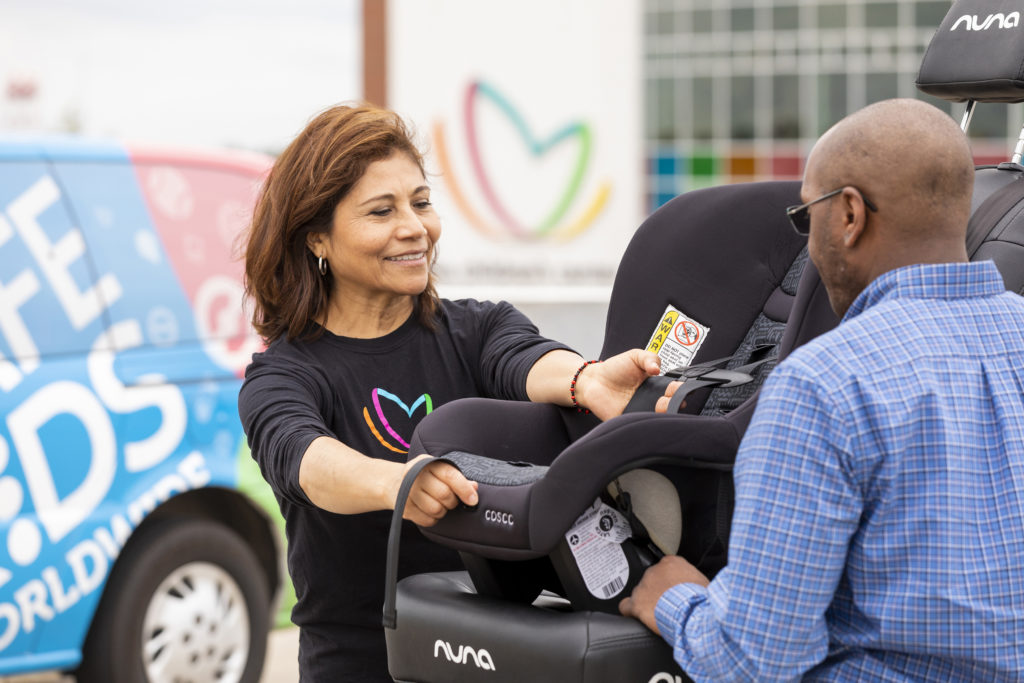
In an effort to reduce motor vehicle-related injury, one of the leading killers of children, and because four out of five child safety seats are used incorrectly, Safe Kids Oklahoma will be hosting a 4-day certification course in Child Passenger Safety. The class will focus on crash dynamics, proper use of child safety seats and common mistakes with seats.

 Sponsored by Safe Kids Oklahoma, the classes will be held from 9 a.m. to 5 p.m. in Oklahoma City.

 Cost of the class is $75. Interested persons should call (405) 271-5695 or register online at www.safekids.org/certification

“Despite laws in all 50 states, observation surveys reveal that only 80 percent of all children in Oklahoma are buckled up, and of those, more than 80 percent are not restrained correctly,” said Christy S. Cornforth, Coalition Coordinator.

 Each year in the U.S., nearly 1,400 children (ages 14 and under) die in motor vehicle crashes and another 280,000 are injured — most because they are not properly secured in vehicles.

 ”Most parents believe they are taking all the right steps to protect their kids in the car. They are shocked to learn how complex the process really is,” said Cornforth. “With hundreds of car seats and several different types of seat belt systems in cars, the potential combinations are numerous, which is one reason installation can be so difficult.”

The child safety seat training is part of the multi-faceted SAFE KIDS Buckle Up program, a national effort to get more children properly restrained in vehicles. The program, sponsored by the National SAFE KIDS Campaign and General Motors, was developed in response to the call to reduce the misuse of child safety seats made by the National Highway Traffic Safety Administration’s Blue Ribbon Panel on Child Restraint and Vehicle Compatibility.

Comments (0)
Jan
03

New Year’s Resolution

By ccornforth · Comments (1)

Each year in the United States, more than 1,800 children ages 4 and under die from accidental injuries in the home, and more than 3 million children ages 14 and under are treated in emergency rooms for accidental injuries occurring at home. Most fatal injuries at home are caused by suffocation, fire and burns, drowning, choking, falls, poisoning or firearms discharged unintentionally.

Safe Kids Oklahoma urges parents and caregivers to check their homes at least once a year for basic safety precautions. “Make it your New Year’s resolution,” says Christy Cornforth, Safe Kids Oklahoma coordinator. “It’s easy to eliminate the most obvious hazards — and you don’t need a lot of expensive equipment.”

The first step in childproofing a home is to explore every room at a child’s eye level. “Literally get down on your hands and knees and crawl around. You’ll be surprised at how much you can reach and how many small objects you can pick up,” says Cornforth. “Anything that can fit through a toilet paper tube is a potential choking hazard. Of course, cleaning products, alcohol, firearms, matches, lighters and other potentially harmful products need to be stored out of reach and locked up.”

Safe Kids Oklahoma also recommends these precautions:

Ÿ   Set your water heater no higher than 120 degrees F. At higher temperatures, it only takes three seconds to burn a child’s skin severely enough to require surgery.

Ÿ   Memorize this phone number: 800-222-1222. From anywhere in the United States, this toll-free number will connect you to the local Poison Control Center. Call this hotline if a child has ingested any substance that isn’t food — but if a child is choking or having trouble breathing, call 911.

Ÿ   Test your smoke alarms every month. Make sure you have working smoke alarms in every sleeping area. Also check for fire hazards such as frayed electrical wires or flammable materials near heating appliances.

Ÿ   Install carbon monoxide detectors in every sleeping area and near fuel-burning appliances. This invisible, odorless gas can be fatal.

Ÿ   Put safety gates at the top and bottom of every stairway. Gates installed with hardware are safer than pressure gates.

Ÿ   Cover unused electrical outlets. You can buy plastic outlet covers or just use duct tape.

Ÿ   Keep firearms unloaded and locked out of reach. And lock up ammunition in a separate place.

Ÿ   Post emergency numbers by every phone. In addition to the numbers for fire and emergency medical services, keep numbers for the pediatrician and a neighbor handy.

Ÿ   Check your first aid kit to make sure it is fully stocked. Make sure babysitters know where to find first aid supplies and how to handle an emergency.

For more information about kitchen safety, window blinds, cribs, windows, furniture and other hazards around the home, call Safe Kids Oklahoma at 405-271-5695 or visit www.usa.safekids.org.

“Safety comes first, even if it means making your home a little less convenient for adults,” says Cornforth. “Safety gates and cabinet locks are a small price to pay to keep a child out of the emergency room.”

Safe Kids Oklahoma works to prevent accidental childhood injury, the leading killer of children 14 and under. Safe Kids Oklahoma is a member of Safe Kids Worldwide, a global network of organizations dedicated to preventing accidental injury. Safe Kids Oklahoma was founded in 1989 and is led by Safe Kids Inc.

Dec
19

Sledding Safety

By ccornforth · Comments (1)

Each year, children ages 0-14 years sustain nearly 52,000 injuries involving snowmobiles, sleds, snow skis or snowboards. “Although sledding is a long standing tradition with holiday fun, there are many dangers involved,” said Cornforth. “Children are at risk of colliding with another person or an object.”

According to the Consumer Products Safety Commission, there were 74,000 sledding injuries treated at hospital emergency rooms, doctors’ offices and clinics in 2004. Head injuries are a common and serious kind of sledding injury.
Safe Kids Oklahoma offers the following tips to help keep your child safe:
•       Adults should always supervise children while they are sledding.
•       Make sure the hill is safe:  that means a hill without obstacles in the sledding path, which doesn’t end near a street, parking lot, pond, or other danger.
•       Take time to avoid collisions.
•       Children under age 12 should wear a fitted helmet while sledding.
•       Never go down a hill headfirst; sit facing forward and steer.
•       Use a sled that can steer—it’s safer than flat sheets, toboggans or snow discs.
•       If you want to go sledding in the evening, make sure the area is well lit.
•       Wear warm and layered clothing to protect from injuries and the cold..

Categories : Toy Safety
Comments (1)

Christmas is one of our most beloved holidays but it is also full of opportunities for young children to encounter poisonous substances. With the abundant decorating, cooking and gift giving, keeping a watchful eye is a bit of a challenge. Distractions in the home are one of the leading causes of poisoning. With a little planning, families can help their children enjoy a safer season. 

Potential poisons at Christmas include lamp oil, potpourri, tree ornaments that resemble candy or other food, bubbling tree lights, artificial snow, such plants as mistletoe and holly berry, aftershave lotion, perfume and cologne. All of these products have a pretty appearance but can produce a toxic result if swallowed. Be careful about leaving opened gifts unattended under the tree or otherwise within reach of a young child.
Poinsettias were once considered deadly, but research findings have shown that, in most cases, children had no symptoms at all or experienced minor upset stomach or vomiting.  However, the same cannot be said for the Jerusalem Cherry, also known as the Christmas Cherry plant, whose leaves and fruit are considered toxic. Contact the Poison Help Line at (800) 222-1222 if you have any concerns that your child may have been exposed to a poisonous substance.

Use caution when bringing the above-mentioned poisonous items into the home as well as with holiday decorations that are sharp and/or breakable. Fire salts, which create a rainbow-colored flame when tossed onto a fire, should also be used with caution, as they contain heavy metals that induce vomiting and gastrointestinal irritation if ingested.  If you are anticipating a houseful of guests, make sure that diaper bags, purses and travel bags are kept out of small children’s reach. These bags often contain prescription drugs and over-the-counter medications, which, if ingested, can be very harmful to small children. 

It takes a little preparation, some extra time and effort but the payoff is priceless – a safer holiday for you and yours!

–Written by Shannon Holcombe

Categories : Home Safety, Poison
Comments (0)
Dec
01

Toy Safety

By ccornforth · Comments (7)

With more than 65 percent of the toys bought in the United States between the Friday after Thanksgiving and Christmas, parents and caregivers are heading into the country’s busiest toy-buying season. 

But with millions of toys being recalled because of dangerous lead paint and magnets, toy shoppers need to remember that that number is a small fraction of the overall number of toys — approximately 3 billion — sold in the United States every year.  “Shoppers need to be even more informed than usual to make sure they buy safe, age-appropriate toys, said Christy S. Cornforth, Safe Kids Oklahoma coordinator. “Even though most toys in the U.S. today are considered to be safe, it doesn’t mean we should throw caution to the wind.”

Email Alerts Keep Shoppers Up-to-Date on Recalls

Each year, approximately 217,000 toy-related injuries are treated in hospital emergency rooms nationwide.  But on average, only 15 children under the age of 14 die from a toy-related injury.

To stay informed, Cornforth recommends that parents sign up for emails that will keep them up-to-date on recalls.  “It’s too difficult to get your information piecemeal from TV or the newspaper,” said Cornforth, “so if you get the emails sent to you each time a recall happens, you’ll be up-to-the-minute and won’t have to worry.”

To sign up for recall emails, go to www.cpsc.gov and click on Sign up for Email Announcements.

Parents and caregivers shouldn’t hesitate to report defects or design features that seem dangerous. “If your child has a close call, the next child might not be so lucky,” says Cornforth. “Report safety concerns about toys to the Consumer Product Safety Commission at 800-638-2772 or www.cpsc.gov. Your experience could be part of a pattern that might lead to a recall.”

Avoid Second-Hand Toys

Cornforth reminds parents that most toys are safe, especially if you buy from a reputable retailer.  “That doesn’t mean you have to go to a ‘big box’ store, but if you shop a locally-owned toy store, make sure that the owner is aware and vigilant about getting recalled items off the shelves.  And avoid used toys, which could have been recalled and not removed from circulation.”

“If you buy toys secondhand or get hand-me-downs, visit www.cpsc.gov to make sure the toy hasn’t been recalled for safety reasons,” says Cornforth. “If a new toy comes with a product registration card, mail it in right away so the manufacturer can contact you if the item is ever recalled.”

Other Precautions to Take

Safe Kids Oklahoma also recommends these precautions:

Ÿ Make sure to buy age-appropriate toys.  All toys are clearly marked if they have small parts; do not buy toys with small parts (or allow a child under age 3 to play with those kinds of toys belonging to an older sibling).

Ÿ Identify dangerous small parts.  To be sure of a toy’s size, use a small parts tester (available in quantity from the Safe Kids Resource Catalog).  Do not let small children play with anything that can fit into one of these cylinders.

Ÿ Inspect toys to make sure they are in good repair. Do not let young children play with toys that have straps, cords or strings longer than 7 inches, due to the risk of strangulation.

Ÿ Actively supervise children.  Caregivers should actively supervise children playing with any toy that has small parts, moving parts, electrical or battery power, cords, wheels or any other potentially risky component. Simply being in the same room as your child is not necessarily supervising. Active supervision means keeping the child in sight and in reach and paying undivided attention.

Ÿ Practice proper storage.  Teach children to put toys away after playing, to help prevent falls and unsupervised play, and make sure toys intended for younger children are stored separately from those for older children. Toy chests should be equipped or retrofitted with safety hinges that prevent the lid from closing on a child who is leaning over the open chest; if a chest does not have safety hinges, remove the lid.

###

Categories : Home Safety
Comments (7)
Nov
16

Kitchen Safety

By ccornforth · Comments (3)

Oklahoma City — Safe Kids Oklahoma reminds parents and caregivers to check the kitchen for preventable hazards and to supervise children at all times in the kitchen.

“It’s important to keep cabinets closed and locked, and to store hazardous substances out of reach, but that’s not enough,” says Cornforth, Safe Kids Oklahoma Local Coordinator. “The most important safety precaution in the kitchen is constant, close and attentive supervision.” Simply being in the same room as a child is not necessarily supervising. An actively supervised child is in sight and in reach at all times.

“Burns — from spills, steam, hot surfaces and flame — can be especially devastating injuries,” says Cornforth. “Because young children have thinner skin than adults, they burn more severely and at lower temperatures.”

Scald burns from hot liquid or steam are the most common type of burns among children ages 4 and under. A child will suffer a full-thickness burn (third-degree burn) after just three seconds of exposure to 140-degree water, and will need surgery and skin grafts.

 Safe Kids Oklahoma recommends these precautions against kitchen burns:

Ÿ Never leave a hot stove unattended. (Unattended food on the stove is the number one cause of home fires.)

Ÿ Never hold a child while cooking or carrying hot items.

Ÿ Cook on back burners whenever possible, and turn all handles toward the back of the stove. 

Ÿ Don’t allow loose-fitting clothing in the kitchen.

Ÿ Keep hot foods and liquids away from the edges of counters and tables. Be especially careful around tablecloths — children can pull hot dishes down onto themselves.

Ÿ Tie up electrical cords of small appliances. A toddler playing with a dangling cord can pull a toaster or microwave down from a countertop.

In addition to hot surfaces, hot liquids and sharp objects, the other major hazard in the kitchen is poison. Store potentially hazardous goods, such as cleaning products and alcohol, in locked cabinets out of reach. Also, install a carbon monoxide detector to alert everyone to get out of the house in the event of a buildup of the odorless toxic gas given off by fuel-burning appliances.


Children who can follow directions may be ready to help out in the kitchen with tasks that do not involve knives, appliances or heat. “You know your own children. Don’t give them knives or let them handle anything hot until they have shown the maturity and coordination to do it safely,” says Cornforth. “Some children mature faster than others, so it’s up to parents to use good judgment about each child’s capabilities.”


###

Categories : Home Safety, Poison
Comments (3)